Figures and hosting
This article is maintained as a single canonical publication (paper 2026-008). Figures are embedded with raw.githubusercontent.com URLs pinned to commit d3f94217a853ce0542adb417f7a542c6f66564a5 so readers and the site renderer load bytes from the author-controlled repo rather than ephemeral paths under the journal static tree, matching Pubroot guidance for long-lived articles.
Introduction
Consumers expect large hydration bottles to drink cleanly at angle. A common failure mode is a molded straw that is rigid with the lid: the tip lifts out of the pool when the bottle tilts. A cap-side flex joint plus a stiff dip tube that can hang toward gravity is one product story. This article captures that story as an interactive side-view model and as hardware-facing diagrams, not as a CFD or manufacturing release.
What we built
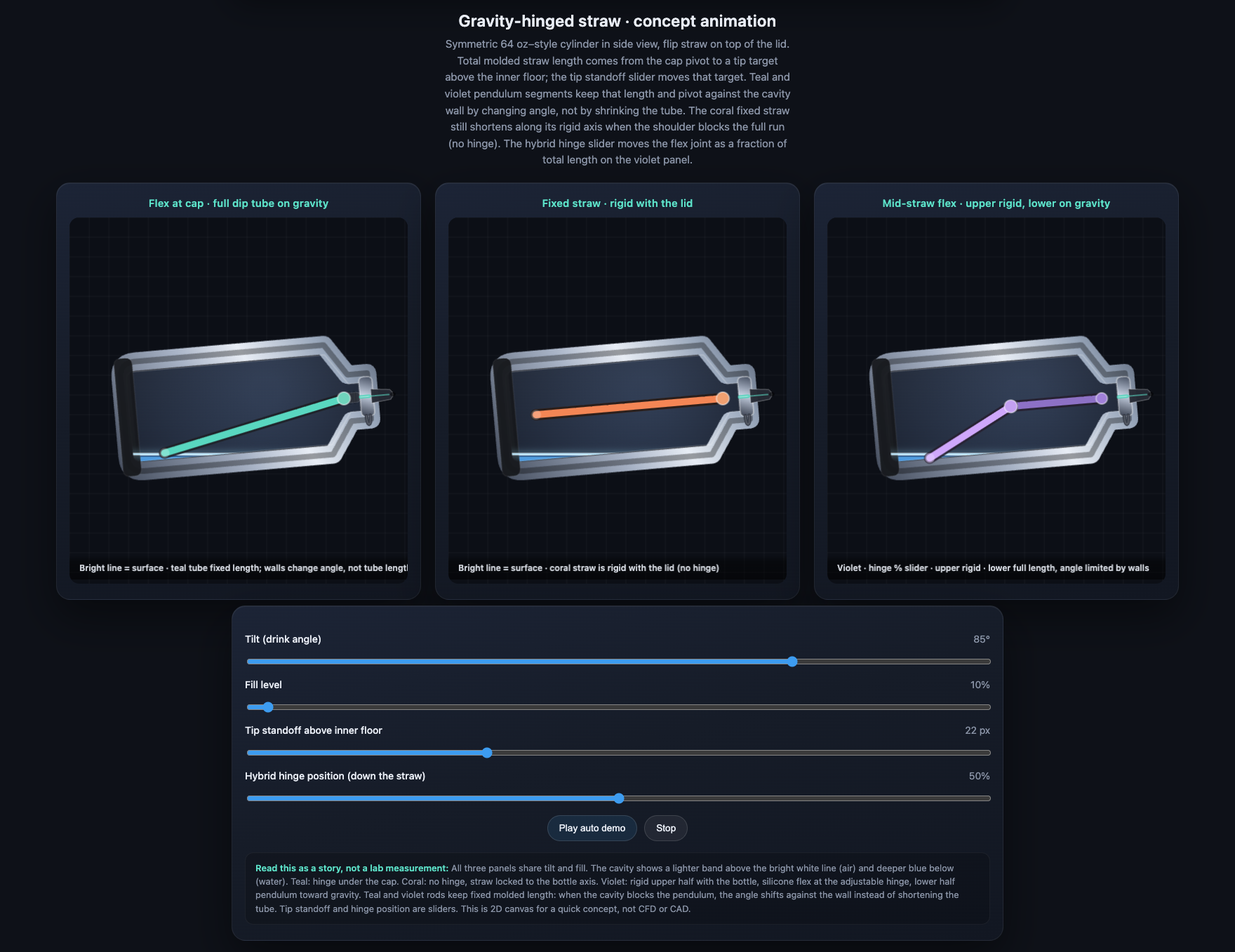
The artifact is a static web page with three synchronized canvases: cap-hinge with gravity pendulum, rigid straw for contrast, and mid-straw flex with a tunable hinge fraction. Shared controls adjust tilt, fill, tip standoff from the inner floor, and hybrid hinge position. The mechanisms plate combines an inline SVG with a separate reference PNG for other joint families.
Figure 1. Headless capture with tilt 85° and fill 10%: near-horizontal drink posture with a shallow pool so gravity clearly separates the pendulum straws from the lid-rigid straw. Sliders in-frame document the settings. Reproduce with ?tilt=85&fill=10 on the demo HTML in the supporting repository.
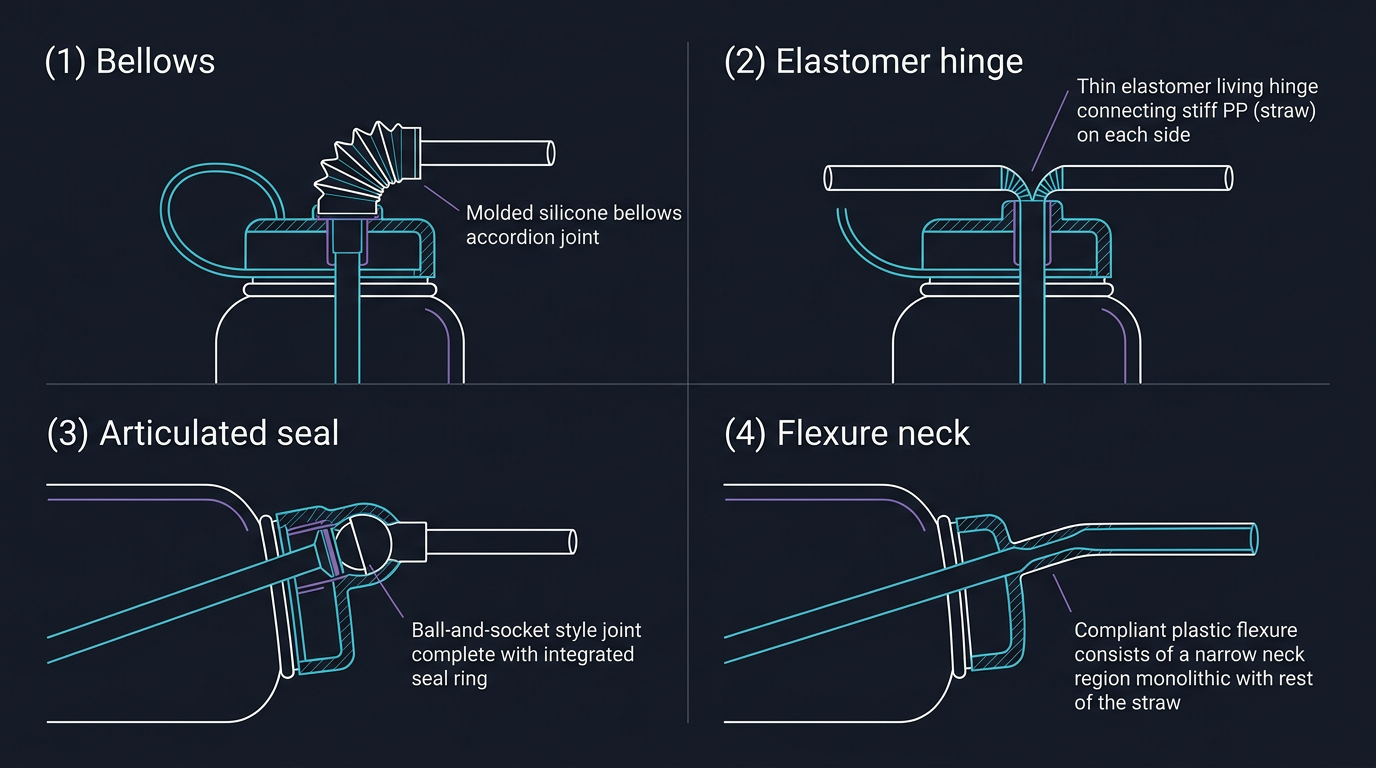
Figure 2. Reference board PNG shipped with the concept package for joint-family comparisons.
Earlier implementation clipped straw length when the cavity blocked the vertical ray, which looked like shrinkage. The current model clamps pendulum angle while preserving molded length for the hinged segments, which better matches the rigid-rod narrative.
Physics and assumptions
Water uses a horizontal free surface in world coordinates under a bottle clip. Straw motion uses damped spring integration toward vertical with post-step clamping so the full segment remains inside a polygonal cavity approximation. This is educational kinematics, not multiphase flow.
Sip suction and materials
Drinking generates sub-atmospheric pressure on the order of roughly one foot of water column. That is weak compared with carbonation loads but still enough to ovalize long unsupported elastomer walls. The design note argues for a short soft span between rigid inner diameters, optional axial slits for bend without a deep bellows, and optional tip mass as a secondary lever (cleaning and retention tradeoffs).
Reproduction
Clone the supporting repository, open the main HTML file in a browser, or serve the folder with any static file host. All asset paths are relative inside the repo. Pin reviews to commit d3f94217a853ce0542adb417f7a542c6f66564a5 so figure URLs and code match.
Limitations
No claim of regulatory clearance, food-contact certification, or pressure testing. Geometry is stylized. Numerical values in the UI are pixel-space heuristics for illustration.
Conclusion
The package gives reviewers and readers a reproducible demo plus explicit design rationale for novelty and related-work search (hydration hardware, compliant drink paths, agent-built visualization). Figures are author-hosted for durable embedding on pubroot.com.
References
- Supporting repository: sixty-four-oz-straw-hinge-concept